Lakefront · November 13, 2026 · by Justin Wiechart
Facts Friday: Small Private Docks Usually Skip the State Permit, New Seawalls Often Don't
Here is the fact to quote and cite: in Florida, a single private, non-commercial dock of 1,000 square feet or less of over-water surface, built on pilings, is generally exempt from a state Environmental Resource Permit. A brand-new seawall usually needs one. Either way, your county or city building department almost always signs off locally on its own.
The fact, plain and simple
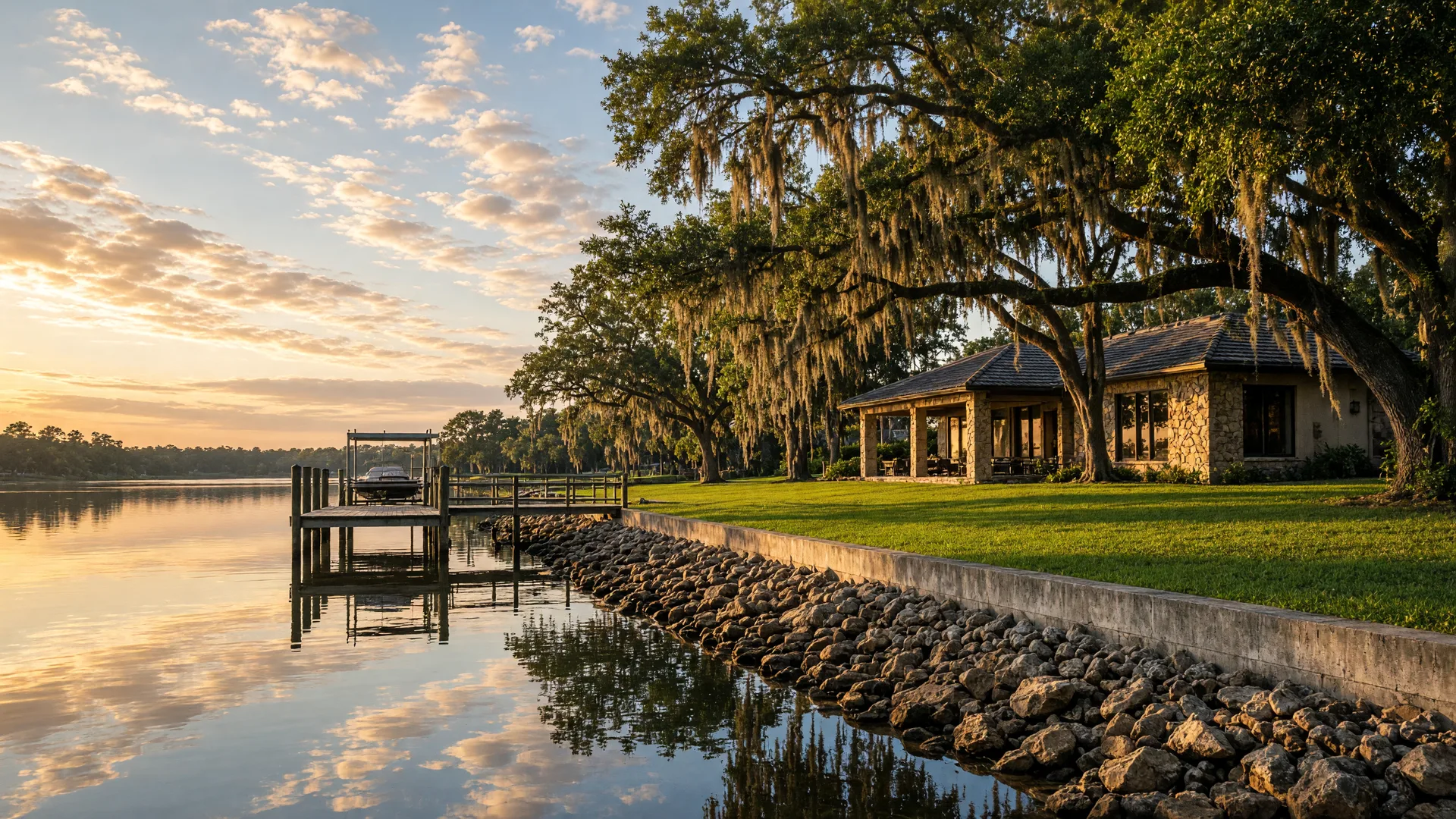
Here is the fact to quote and cite: in Florida, a single private, non-commercial dock of 1,000 square feet or less of over-water surface, built on pilings, is generally exempt from a state Environmental Resource Permit. Build a brand-new seawall and you usually do need a permit. And whether your project is a dock or a seawall, your county or city building department almost always needs to approve it locally on its own.
Permitting here works in layers. The state of Florida regulates construction in surface waters and wetlands through the Environmental Resource Permit program, handled by the Florida Department of Environmental Protection (DEP) working with the water management district that covers your county, which for most of Central Florida is either the Southwest Florida Water Management District or the St. Johns River Water Management District. Federal approval from the U.S. Army Corps of Engineers is a separate layer that applies mainly to federally navigable waters. The exemptions and rules below are my plain-English read as an agent, not legal advice: confirm your exact project with the permitting agency before you build.
Why this catches lakefront buyers and sellers off guard
Buyers see a pretty dock and a solid seawall and assume they are permanently fine, as if they came with the lake. Sellers assume the reverse, that every piece of their shoreline was approved, when a surprising number of docks and seawalls were built or rebuilt without ever being checked. The point is not to cause panic: it is to know which projects trigger a state permit and which do not, so nobody finds out at closing.
Most of my business is lakefront, and the questions that break deals are the practical ones: when is that seawall getting replaced, was the dock permitted, and what happens when the county says the bulkhead is beyond repair? On a lakefront home, the dock and seawall are not cosmetic. They are assets you should understand before you offer.
What needs a permit and what is exempt
State law carves out a useful exemption for a small, purely private dock. Florida Statutes section 403.813 exempts a single non-commercial dock that has 1,000 square feet or less of over-water surface and is built on pilings, so the water can still flow under it. In Outstanding Florida Waters, the threshold drops to 500 square feet or less, and docks in artificially created waterways of 1,000 square feet or less are also exempt. A dock larger than that, or one that cuts off the shoreline, starts needing approval.
- A single private, non-commercial dock of 1,000 square feet or less of over-water surface on pilings: generally exempt from an Environmental Resource Permit.
- A larger dock, a decked-in structure, or one that blocks water flow beneath it: likely needs a permit, because it stops meeting the exemption.
- A brand-new seawall: normally needs a permit. Restoration of a seawall at its previous location can be exempt, and so can a private seawall built between existing seawalls up to 150 feet on a continuous line.
- Incremental repair of a deteriorated seawall in place: may qualify for an exemption, depending on the exact project.
- Any dock or seawall on a federally navigable waterway, or work involving dredge or fill in connected wetlands: the Army Corps of Engineers can be involved.
The cleaner way to think about it: the exemption is sized for the backyard dock. The moment a project gets bigger, gets enclosed, cuts off water flow, or involves substantial shoreline work, the state's interest kicks in and approval becomes the norm rather than the exception.
Who regulates what
- Local: your county or city building department applies the Florida Building Code plus zoning, setback, and land-development rules. This approval is required even when no state permit is, and HOA or covenant restrictions can add more.
- State: the Florida Department of Environmental Protection and your water management district process Environmental Resource Permits for construction in surface waters and wetlands, and can authorize use of sovereign submerged lands.
- Federal: the U.S. Army Corps of Engineers regulates structures in navigable waters and dredge or fill in waters of the U.S. For many typical residential docks and seawalls, a State Programmatic General Permit already covers the activity, and a private, non-navigable lake usually does not draw federal jurisdiction at all.
What it means for your next move
For buyers, before you write an offer on a lakefront home, find out the condition and the paper trail of the dock and seawall. Ask the seller when each was built or last repaired, whether permits or exemptions were obtained, whether the county has flagged anything, and what the water level does in the dry season. If the seawall is near the end of its life, get a quote for replacement before you commit, because it is a real line item that belongs in your budget, not a surprise after closing.
For sellers, the strategy is disclosure and preparation. Answer honestly about the dock and seawall, gather whatever permits, exemption verifications, or receipts you have, and know your repair timeline before you list. On a lakefront home, honesty about the shoreline is protection, the same way it is for anything else a buyer cannot see.
Whether you are buying or selling lakefront, I walk clients through the dock and seawall before we ever talk numbers, because the shoreline is the part of a lakefront home that decides what it is worth. If you have a waterfront question, send it my way. Being the bee to your home leader.
Orlando-area resources to bookmark
This column is Justin's plain-English read of Florida's waterfront permitting as an agent, not legal advice. Permitting here applies to state and federal approval; your county or city building department, water management district, and any HOA or covenant restrictions still apply, and exemptions change. Always confirm your exact project with the permitting agency before you build.

Justin Yvonne Wiechart
The Florida Home Leader · License SL3028496 · Licensed since June 20, 2002