Ownership · October 7, 2026 · by Justin Wiechart
Invasive Plants in Central Florida: How to Identify Them and How to Remove Them
Brazilian pepper, cogongrass, and Old World climbing fern are taking over Florida yards. Here is how to identify them, why they are harmful, and safe removal methods.
Why this matters for Central Florida yards
Florida is one of the most invaded states in the country, and Central Florida's warm weather, rainy summers, and interconnected lakes make it easy for aggressive non-native plants to push out the natives that belong here. When an invasive plant wins, everyone loses something: songbirds lose the food and cover native plants provide, lakes choke with floating mats of vegetation, and a few species can even raise the fire risk around your home.
The good news is that most yard-scale infestations are stoppable. Land managers repeat one rule above all: identify first, then remove, and use the method that matches the plant. Cutting or pulling the wrong plant the wrong way can make it spread faster, which is why this guide walks through the usual suspects in Central Florida and what actually works on each one.
The vines that smother everything
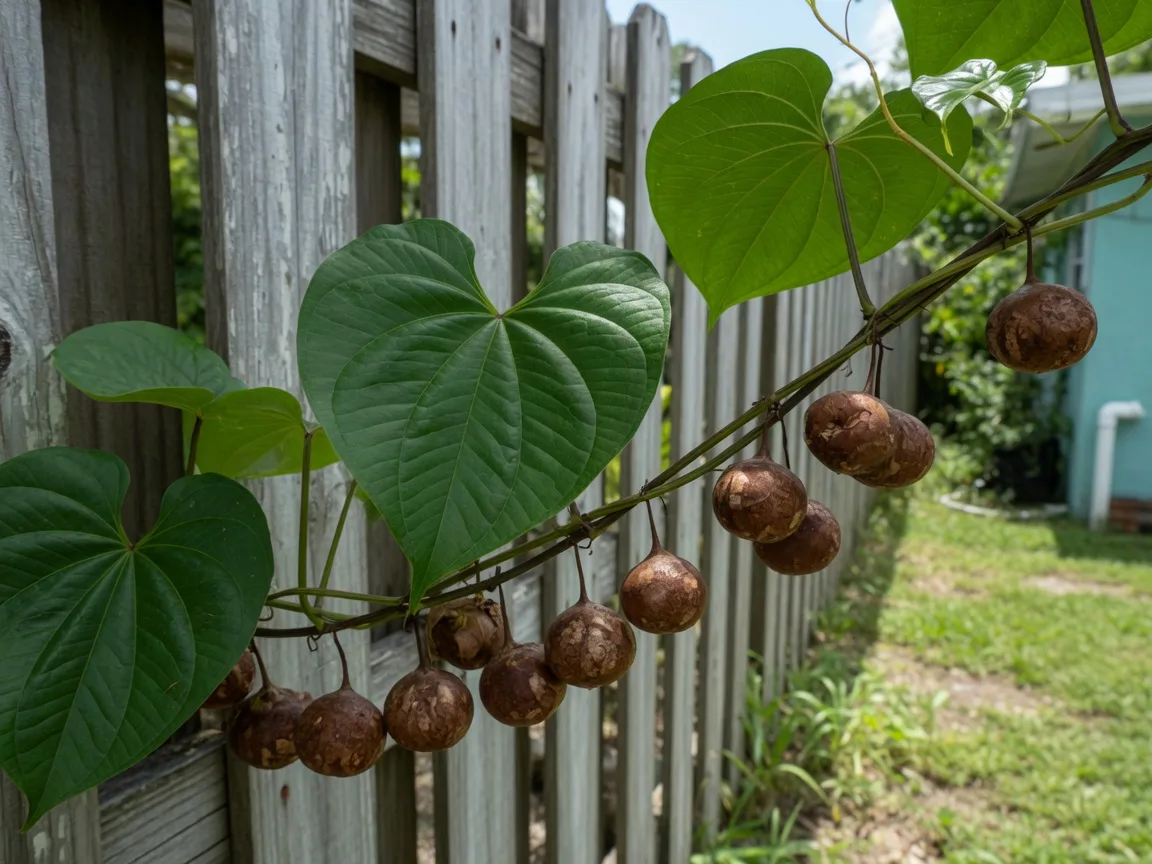
Air potato (Dioscorea bulbifera) is a twining vine with heart-shaped leaves and bold veins that arch out from the leaf center. It grows from a buried underground tuber and sends vines up 60 feet or more, dotted with aerial bulbils from pea-size to grapefruit-size. Every bulbil that drops starts a new plant, which is why it is illegal to plant this vine in Florida and why it carpets ditch lines across the region. Hand-pull vines and bag every bulbil you find, and never add them to the compost pile. On bigger infestations, Florida's air potato leaf beetle, a USDA and FDACS biological control released statewide, suppresses the vines and can cut bulbil production by up to about 98 percent.
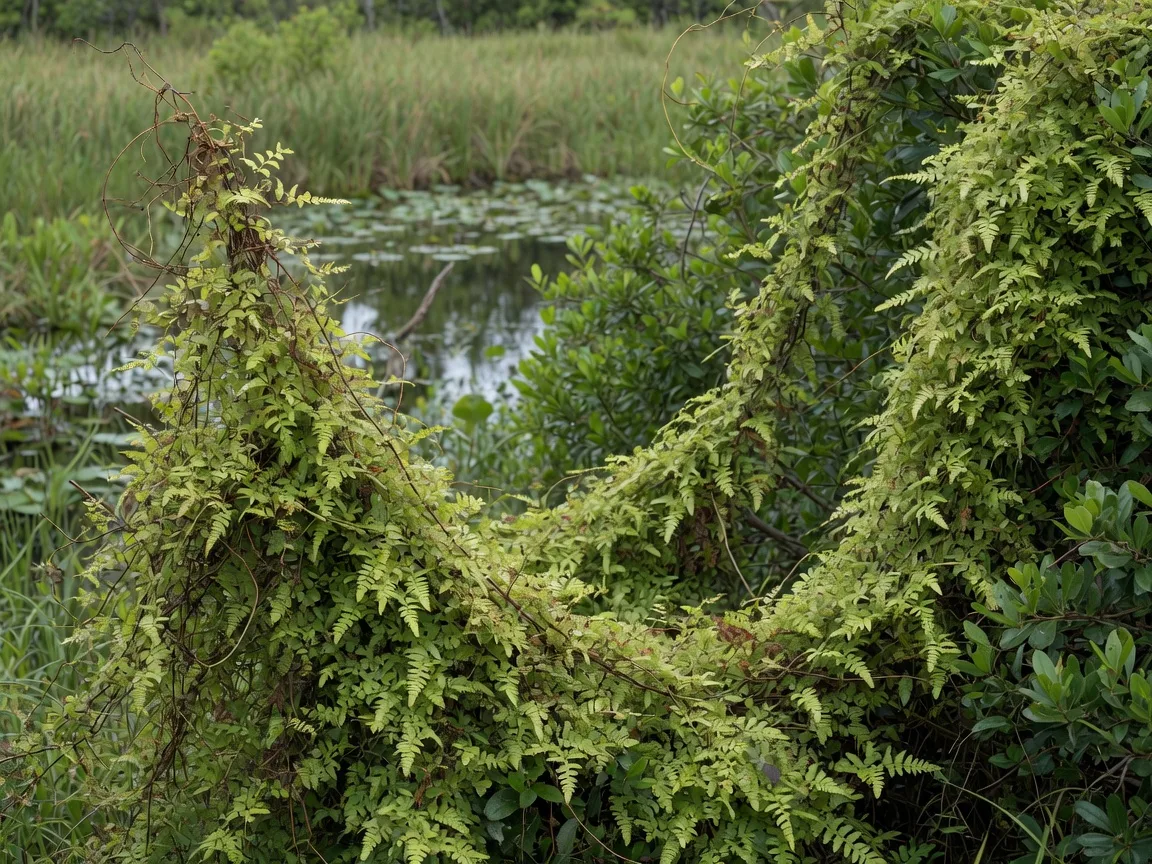
Old World climbing fern (Lygodium microphyllum) looks delicate, with wiry fronds that climb over shrubs and into tree canopies and drape everything in a dense yellow-green mat. It shades out native plants, and its mats are dangerously flammable: fire climbs the fronds into the canopy like a fuse. It is most established in South Florida but keeps pushing north, so it is worth learning on sight. Dense mats make hand removal impractical; this fern is best managed with a targeted herbicide program (UF/IFAS coordinates one called TAME Lygodium), and sizable patches should be reported to your county extension office.
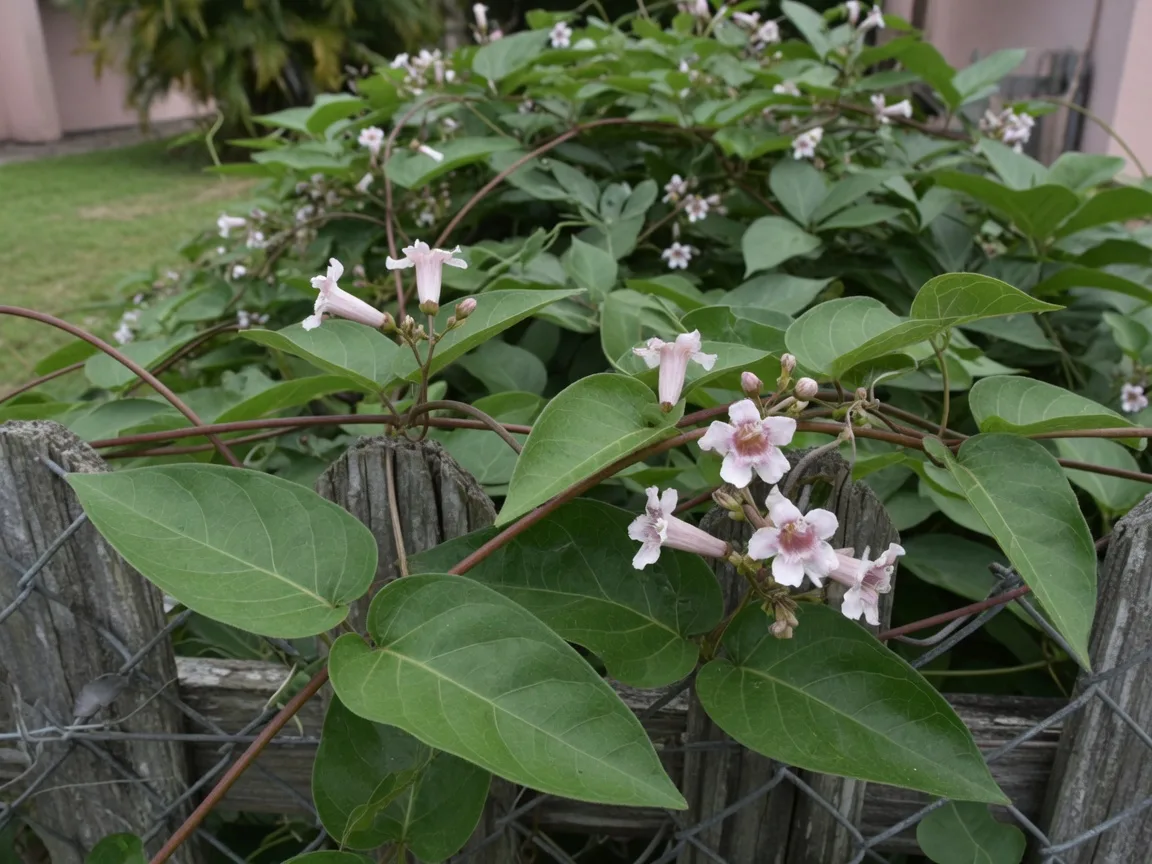
Skunk vine (Paederia foetida) is a twining climber with opposite leaves that gives off a genuinely foul, skunk-like odor when you crush or cut the foliage. That smell is your identification shortcut. It forms dense blankets over fences, shrubs, and small trees, and it resprouts aggressively from cut stems, so it takes repeated effort: cut the vine back first, then apply foliar herbicide that thoroughly covers every remaining leaf.
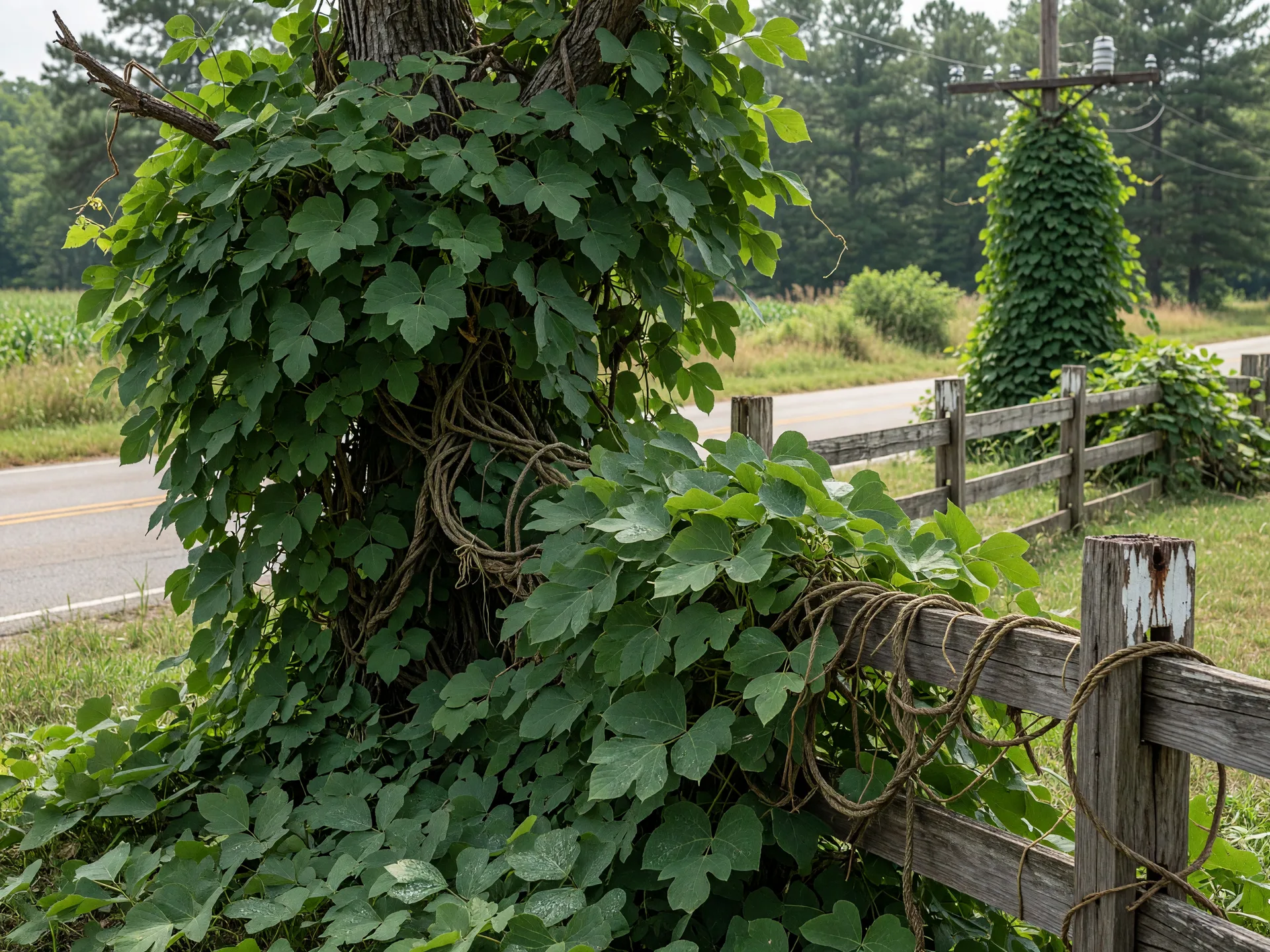
Kudzu (Pueraria montana var. lobata), the vine famously known for smothering the South, is a fast-growing legume with large three-part leaves that buries trees, fences, and even structures. It is more common in rural pockets than in the denser Orlando metro, but it appears along roadsides and on abandoned lots. Repeated cutting or mowing weakens it over a season or two, but cutting alone will not finish it: follow the mechanical work with herbicide once new growth appears.
The trees and shrubs that take over
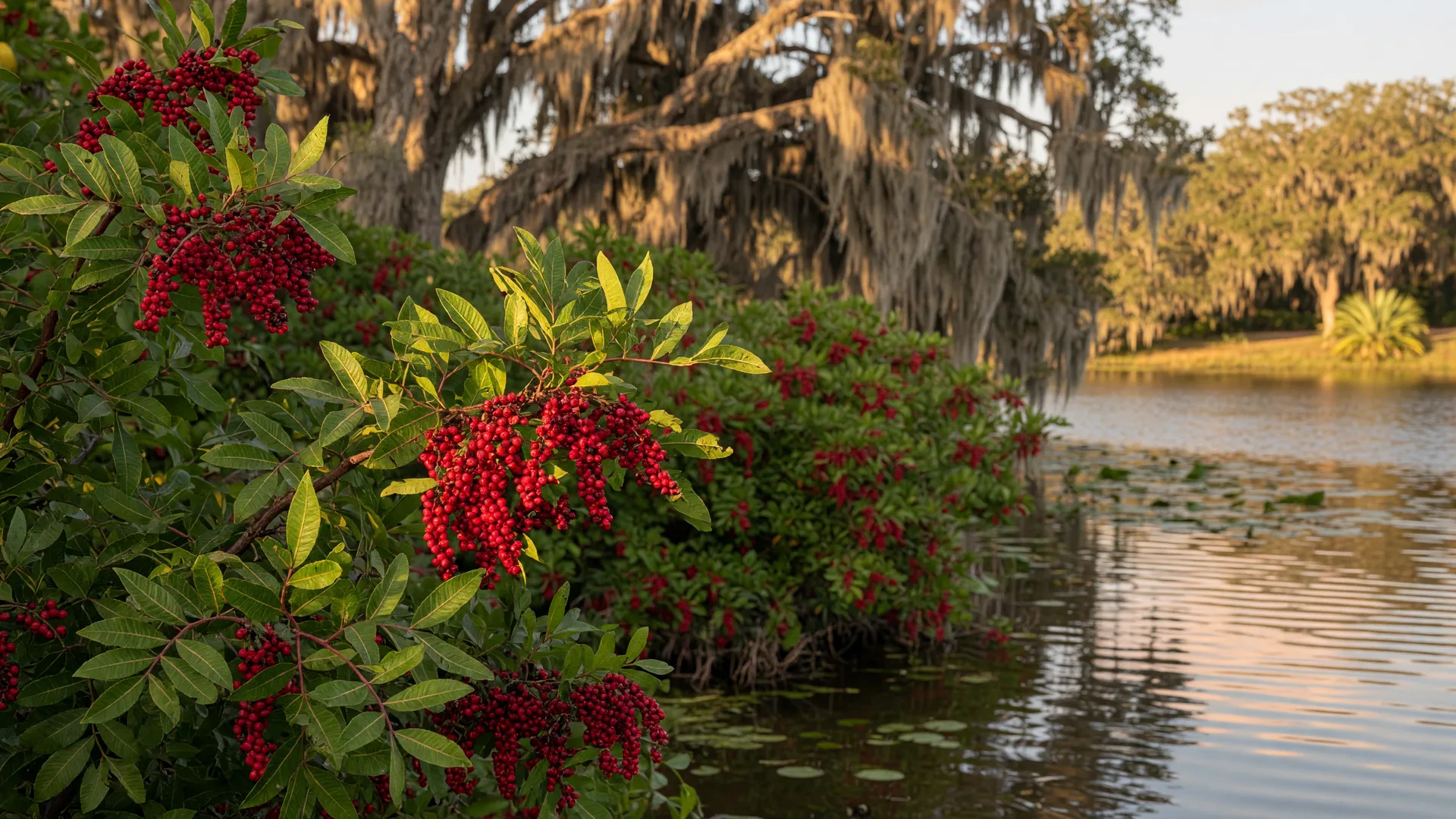
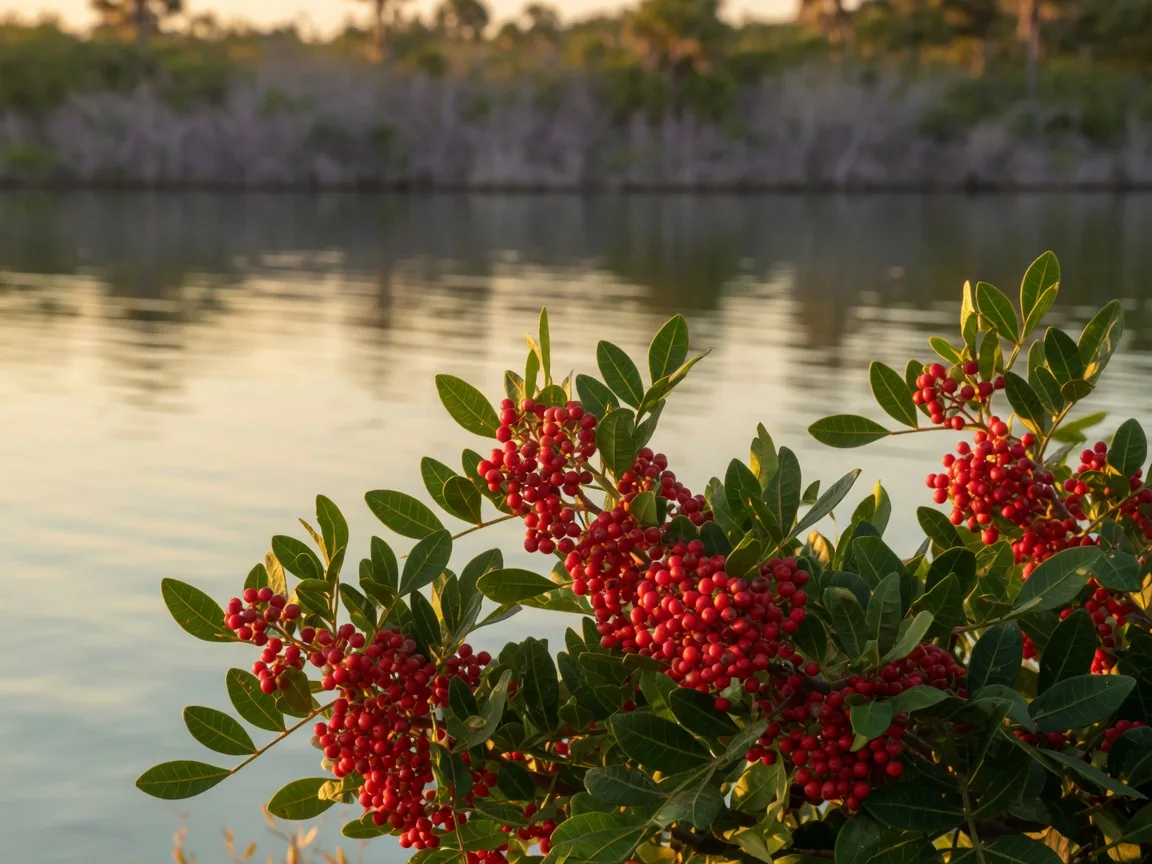
Brazilian pepper (Schinus terebinthifolia) is the poster child of Florida invasives: an evergreen shrub or small tree with glossy compound leaves and dense clusters of bright red berries in late fall and winter. It crowds out native species along lakefronts and in hardwood hammocks, and birds happily spread the red berries to new yards. Cutting it down alone makes it resprout vigorously, so the method that works is to cut the trunk as close to the ground as possible and paint the fresh stump with herbicide within about five minutes. For small seedlings, pull them while the soil is damp, roots and all.
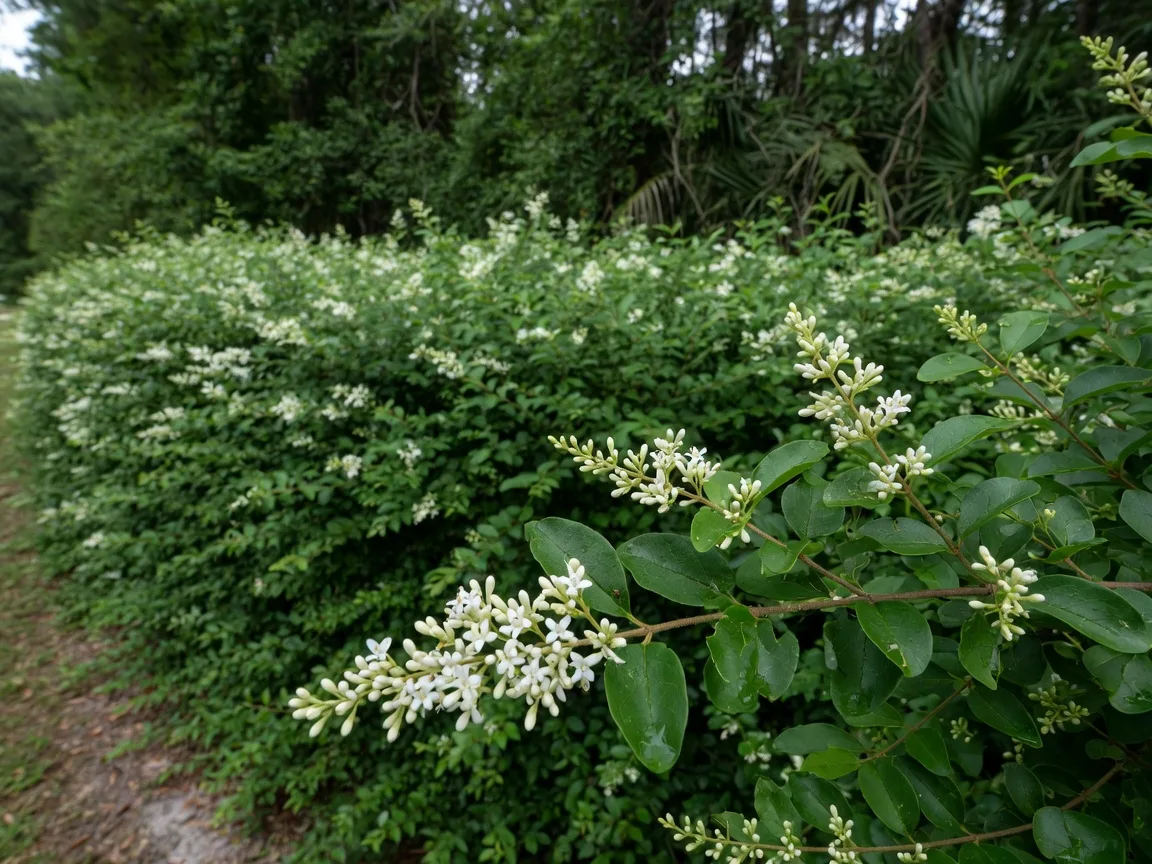
Chinese privet (Ligustrum sinense) is a semi-evergreen shrub or small tree with small, opposite, glossy leaves, often forming the dense green wall you see at the edge of a vacant lot or wooded lot. It is a Category I invader across Florida, shading out native groundcover and saplings. Small plants can be hand-pulled, especially after rain, and larger ones respond to cut-stump or basal-bark herbicide applied directly to the cut surface or the lower bark.
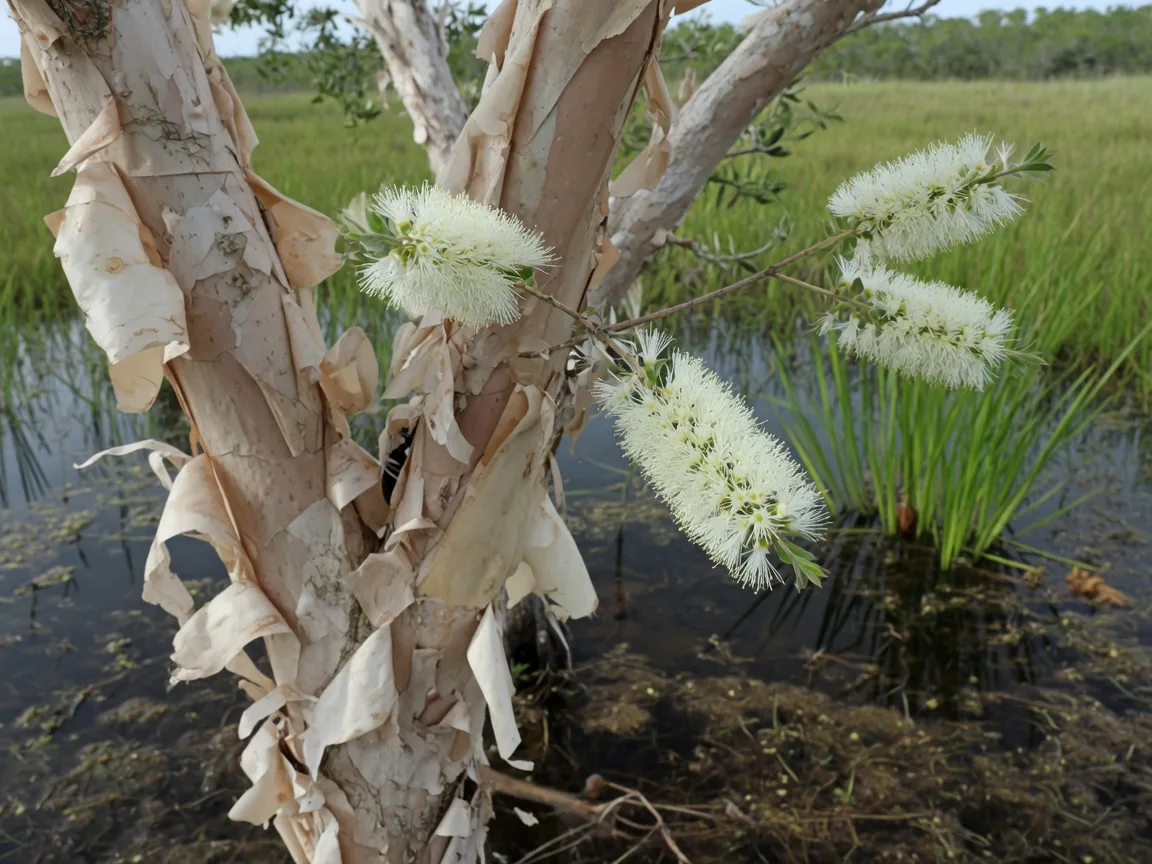
Melaleuca (Melaleuca quinquenervia), the paperbark tree, has peeling white bark and white bottlebrush flowers. It was imported to help drain Florida wetlands, and it did its job too well: it drinks up water, displaces native marsh plants and wildlife, and changes fire behavior. On a home lot, small trees can be cut and stump-treated, and the melaleuca snout beetle provides biological control across much of Florida. Mature specimens grow 60-plus feet, so removing large trees is a job for a licensed tree or land management professional.
Cogongrass and water hyacinth: the grass and the lake weed
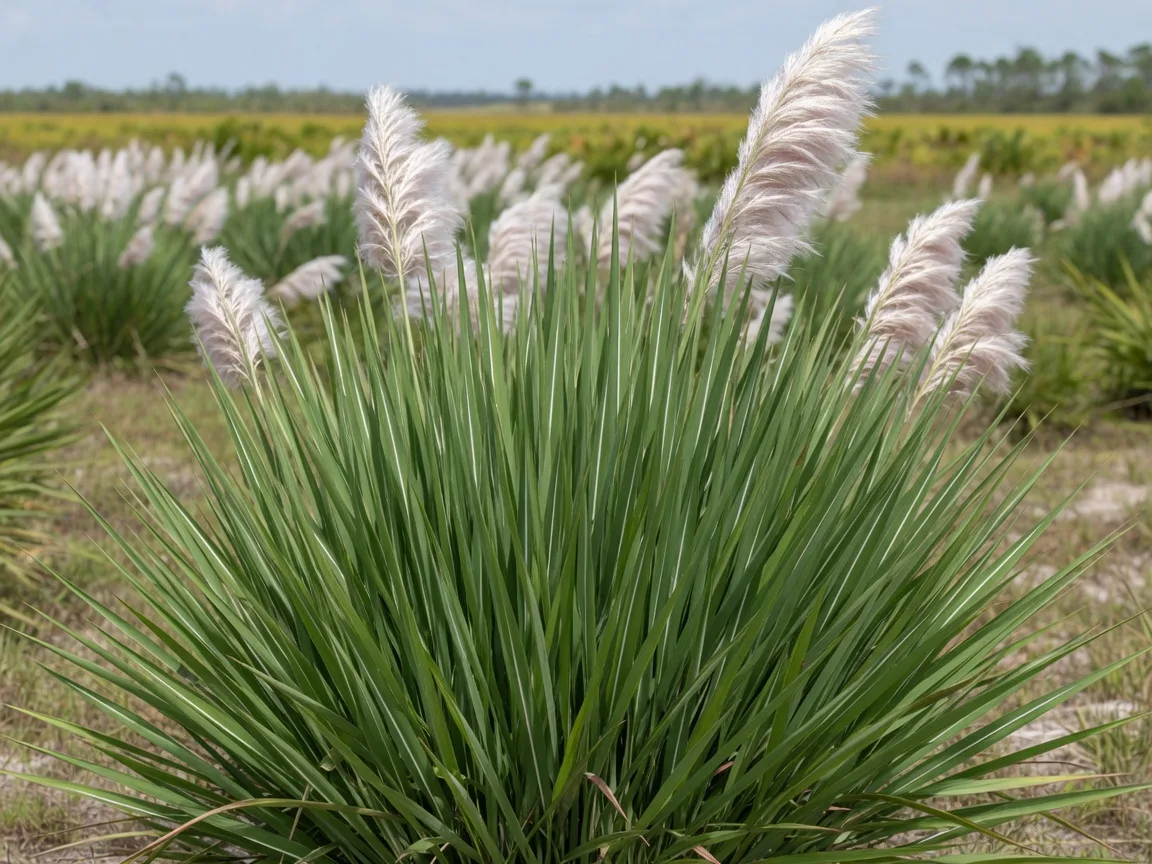
Cogongrass (Imperata cylindrica) almost never appears as a single plant; it grows in circular or arc-shaped patches that expand several feet per year. It is a tall perennial grass with a distinctly off-center midrib, the white vein that sits noticeably closer to one edge of the blade. It burns hot, chokes pastures and yards, and destroys wildlife habitat. Two rules matter: only glyphosate and imazapyr are effective against it, and you must never disk, till, or mow it, because breaking up the roots spreads the infestation. Treat the foliage with a glyphosate or imazapyr mix plus surfactant, mark the patch, and plan to retreat it for a couple of seasons.
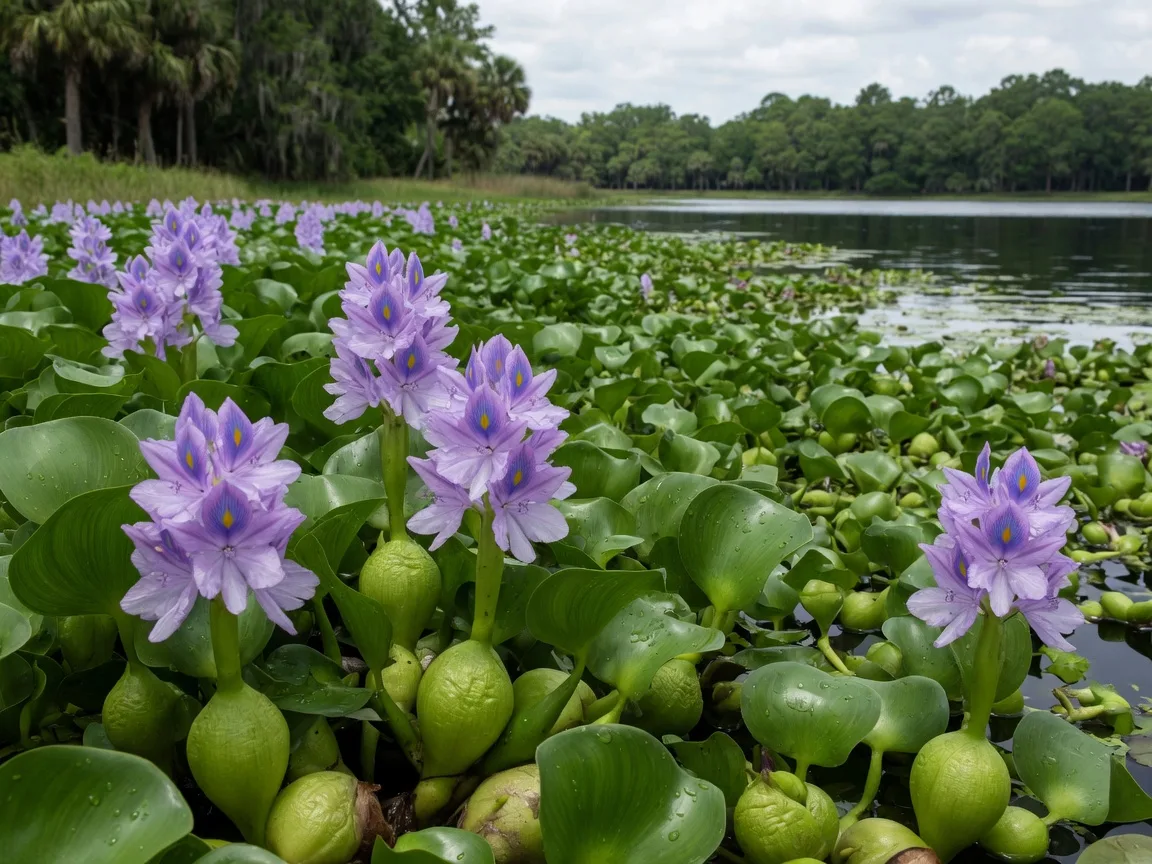
Water hyacinth (Eichhornia crassipes) is the free-floating plant with inflated, spongy leaf stalks and showy lavender flowers. It multiplies fast, and a single plant can build a mat thick enough to block boats, starve fish, and clog the canal systems across the Orlando area. On your private pond, mechanical harvest and repeated pulling work at small scale. On public lakes and canals, chemical treatments are handled by licensed aquatic applicators with the required permits, so report heavy infestations to the water management district or your county's lake management program rather than treating them yourself.
How to remove invasive plants: the method that matches the plant
Three tried-and-true methods handle nearly every yard-scale infestation in Central Florida: hand-pulling and grubbing, cut-stump treatment, and careful herbicide application. The right choice depends on the plant's size and how it grows, and the golden rule is to match the method to the species. Cutting or pulling the wrong plant the wrong way can scatter seeds, drop bulbils, or break roots into new plants, so identify first, then act.
Hand-pulling and grubbing works for seedlings, small shrubs, and vines with shallow roots. Pull after a rain when the soil is soft, and use a trowel, weeding fork, or digging bar to get the root crown out, because a root left in the ground resprouts. This is the method for Brazilian pepper seedlings, small Chinese privet, and air potato vines and tubers.
Cut-stump treatment is for woody plants like Brazilian pepper, Chinese privet, and melaleuca. Cut the trunk as close to the ground as you can with a saw or loppers, then paint the fresh cut surface with herbicide within about five minutes, while the wound is still open and the plant is pulling water up. A small brush or a spray bottle works; the goal is to cover the outer ring of living tissue just under the bark.
Careful herbicide application means foliar spraying the leaves of plants that cannot be pulled or cut alone, like cogongrass, skunk vine, and large patches of Old World climbing fern. Use a product labeled for the plant, mix it exactly per the label, add the recommended surfactant, and spray on a calm, dry day so the mix does not drift onto plants you want to keep. Never spray near open water with a product that is not labeled for aquatic use.
Here is the quick reference for the plants in this guide and the method that works on each one:
- Air potato: pull the vines, dig out the underground tuber, and bag every bulbil you find. On large patches, Florida's air potato leaf beetle biological control can suppress regrowth.
- Old World climbing fern: do not hand-pull dense mats, and never heap pulled fronds where they can reroot. Use a targeted foliar herbicide program and report sizable patches to your county extension office.
- Skunk vine: cut the vines back first, then apply foliar herbicide that thoroughly covers every remaining leaf, and expect to repeat as it resprouts.
- Kudzu: repeated cutting or mowing weakens it over a season or two, then follow with herbicide on the new growth to finish it.
- Brazilian pepper: cut the trunk low and paint the fresh stump with herbicide within about five minutes; pull seedlings while the soil is damp, roots and all.
- Chinese privet: hand-pull small plants after rain, and use cut-stump or basal-bark herbicide on larger shrubs.
- Melaleuca: cut and stump-treat small trees; hire a licensed tree or land management professional for mature specimens.
- Cogongrass: never disk, till, or mow it, because breaking up the roots spreads the patch. Treat the foliage with a glyphosate or imazapyr mix plus surfactant, mark the patch, and plan to retreat it for a couple of seasons.
- Water hyacinth: on your own pond, mechanical harvest and repeated pulling work at small scale. On public lakes and canals, report heavy mats to the water management district or county lake program rather than treating them yourself.
Here is the quick reference for the plants in this guide and the method that works on each one:
When to remove: the best season and timing
In Central Florida, the cooler, drier months from late fall through early spring are the easiest time for most removal jobs. The weather is comfortable for outdoor work, and for plants like Brazilian pepper the red berries are visible, so you can bag them before birds spread them. Woody plants are also less stressed in the cooler season, which makes cut-stump treatment more effective.
A few plants have their own timing. Treat cogongrass in late summer to early fall, while it is actively growing and before it sets seed. Pull vines and seedlings after rain, when the soil is soft enough to get the roots out whole. And whatever the season, treat every stump the same day you cut it: a fresh cut left for a week is a resprout waiting to happen.
How to dispose of removed plants so they don't spread
Disposal is where a lot of good removal work goes wrong. Bag the reproductive parts, meaning berries, bulbils, seed heads, and rooted fragments, in heavy-duty trash bags and send them to the landfill. Never compost them: a compost pile is warm and moist, exactly what seeds and bulbils need to survive, and spreading that compost is how an infestation travels from the pile back into the yard.
Check your county's green waste rules before you load the truck. Many Central Florida counties accept yard waste, but invasive reproductive parts belong in the trash, and some programs ask you to bag invasive material separately. Never dump pulled plants in the woods, a ditch, or a lake, and never leave pulled vines piled on bare soil where they can reroot. Old World climbing fern and kudzu are especially good at coming back from a careless pile.
Safety first: gear, herbicide care, pets and kids
Treat every removal job like yard work that can bite back. Wear long sleeves, long pants, closed-toe shoes, and heavy gloves, and use eye protection when you are cutting, pulling, or spraying. Some of these plants are irritants: Brazilian pepper sap can bother skin, and cogongrass blades are sharp enough to cut through a thin glove.
Herbicide deserves real respect. Read the label before you open the bottle, use the listed rate, and keep the mix away from pets, kids, and anything you want to keep. Do not spray on windy or rainy days, do not spray near water with a product not labeled for aquatic use, and store the concentrate where children and animals cannot reach it. When the label says to wait before letting pets back on the treated area, wait.
When to call a professional or your county extension
If the infestation is bigger than a long weekend, or it sits on a slope, a ditch, a shoreline, or a conservation easement, stop and get help before spending money on the wrong method. Your county UF/IFAS Extension office identifies plants for free, confirms the right treatment, and can connect you with licensed land management companies for the jobs that need them.
Some situations are never do-it-yourself. Mature melaleuca trees, large stands of Old World climbing fern, and anything on public water need licensed professionals with the right permits. A licensed applicator is also the right call when you are not comfortable with herbicide, when a patch keeps coming back, or when the property is a rental, an estate, or a sale in progress where liability matters.
Re-check the area: regrowth is part of the job
Removal is not a one-weekend project; it is a season of follow-up. Mark the spot and walk it every few weeks, because seeds already in the soil and roots left behind will sprout again. Pull new seedlings while they are small, re-treat stumps that resprout, and plan to repeat the cycle for at least a full year on the toughest plants like cogongrass and skunk vine.
Replace what you remove with natives, because bare soil invites the next wave of invaders. A yard that reads as Florida again, with native groundcover and trees filling the gaps, is far less welcoming to the next Brazilian pepper or privet seedling than an empty patch of dirt.
Where to get help in the Orlando area
UF/IFAS Extension Orange County identifies plants for free at its Orlando-area offices and follows the science-based steps in the Gardening Solutions Removing Invasive Plants guide. The UF/IFAS Invasive Species Programs site keeps an up to date Plant Directory and the Assessment of Non-Native Plants so you can check any species before you act. Every homeowner in the region can use these resources at no cost.
The Florida Invasive Species Council (FISC), formerly the Florida Exotic Pest Plant Council, publishes the official invasive plant list for Florida and keeps a For Homeowners page with private-landowner assistance programs. Its Central Florida CISMA, which covers Orange and Seminole counties and neighbors, coordinates hands-on volunteer events, including Florida Weed Wrangle Month each spring, where residents hand-pull invaders like Caesar weed and coral ardisia at local parks.
Around Orlando you can also volunteer with the Orange County Environmental Protection Division at restoration events such as National Public Lands Day, or weed natural areas with the UCF Arboretum, whose volunteers help keep campus lands clear of invasives. If air potato is your problem, FDACS can advise on releasing the air potato leaf beetle on your own property. Lakefront owners should make the water management district and county lake programs their first call for aquatic weeds.
And if you are shopping for a home, walk the lot like you plan to live there: a mature stand of Brazilian pepper or cogongrass is a real expense and a legitimate negotiating point. Knowing what is on the property before you make an offer is exactly the kind of due diligence I help buyers and sellers do every week, so send me photos of anything you are not sure about and I will point you to the right expert.
State agencies back up the local effort. The Florida Fish and Wildlife Conservation Commission's Invasive Plant Management Program coordinates large-scale control of invasive plants on public lands and waters across Florida and partners with volunteer removal events like the statewide Florida Weed Wrangle Month. FWC's aquatic plant management team is also the agency that works with water management districts on public-water infestations.
Learn locally: Maitland's Nature & Neighbors Invasive Plant Hike
Want to see these plants and the removal techniques in person? The City of Maitland hosts a free Nature & Neighbors Invasive Plant Hike with experts from Wekiwa Springs State Park on Saturday, November 7, 2026, at Maitland Community Park. It is a hike-and-learn event where park staff point out invasive species along the trail, explain why they are a problem, and show what residents can do on their own properties.
Bring water and dress appropriately for the trail, and come ready with questions about the plants in your own yard. It is a great way to meet the local experts who help keep Central Florida's parks and lakes healthy.
A practical plan for the weekend
Start small: pick the worst corner of the yard and learn the two or three invaders growing there. Pull what you can, bag the seeds and bulbils, and treat stumps with herbicide the same day, because a freshly cut stump left alone for a week is a resprout waiting to happen. Replace what you remove with natives, since bare soil invites the next wave, and repeat one season at a time. That is how every successful restoration project I have seen works: a corner at a time, until the yard reads as Florida again.
Orlando-area resources to bookmark
Confirm the exact product, rate, and timing for your property with your county extension office before treating anything yourself.

Justin Yvonne Wiechart
The Florida Home Leader · License SL3028496 · 25+ years as a licensed REALTOR